Sacrifice….

On Id-ul-Adha, the Moon, too, seems to have sacrificed some of Herself:

Photobucket

The festival is also called Bakrid, and this is not because the Bakri (Goat) is beingvenerated, it’s because it is going to be sacrificed…
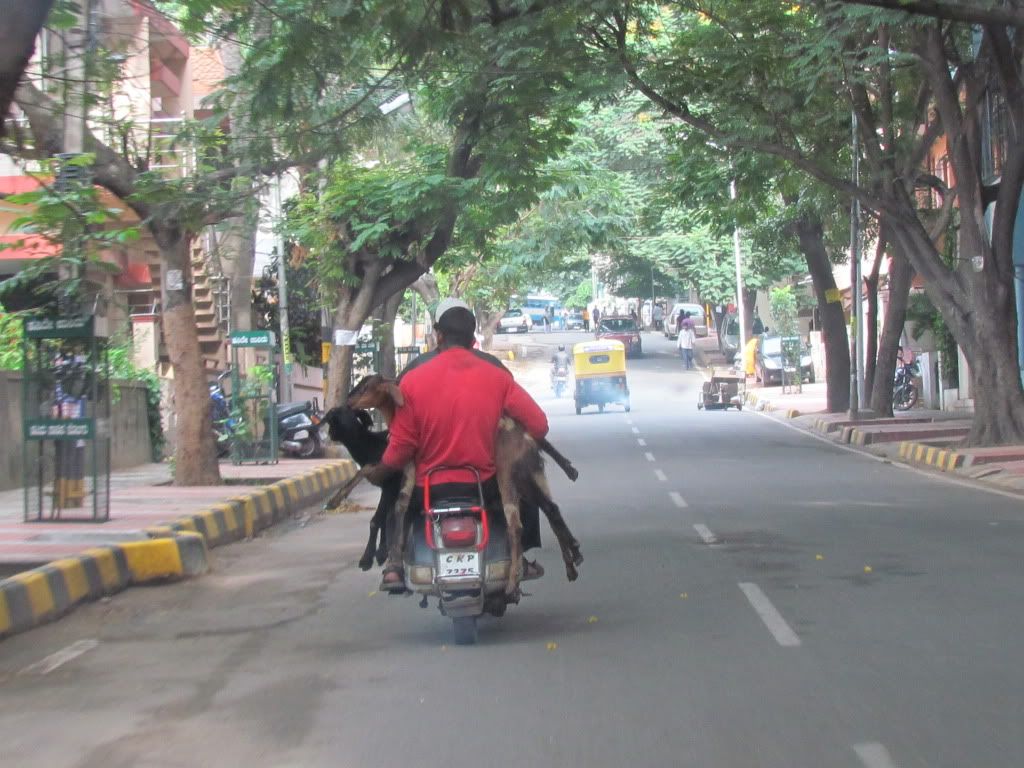
bakrid 210812

I was musing on how the concept of sacrificing something to appease a Higher Power came about…

this

is what the Wiki had to say.

I wonder if the gentle, repressed people of today’s urban societies realize that the pumpkins that they smash into the roads after smearing them with vermilion….are a symbol of blood sacrifice? I listened to one elderly gentleman ("I am proud to be a Brahmin") holding forth on the horror of blood sacrifice on Id. This gentleman was utterly horrified when I explained to him how he too was upholding the ritual of sacrifice in a symbolic way…and he refused to accept the idea.

However, the idea that yielding up one life (even one’s own) will result in a reward in this world, or the next…that still intrigues me a lot.

Oh well, a lot of lambs to the slaughter would not find my post interesting at all….

Leave a Reply

Your email address will not be published. Required fields are marked *

Similar Story

How women in Bengaluru navigate their working lives and the city

City of Women is an upcoming podcast about how women in the city explores the calculated strategies, the backdoor negotiations and the sometimes absurd lengths women go to have fun and feel free in their city. Every Indian woman knows that being out in the city comes with rules - rules that determine who gets to be where and what you can and can’t do. But this show is not about those rules. It’s about how they get broken, bent, and jumped over when women decide to do things just for themselves. City of Women is fun, complex, and a…

Similar Story

Unseen work, unheard stories: A convention on women and labour

A unique day-long initiative on February 29, 2020 to create a platform for women to honour and amplify their voices, their stories, and their knowledge.

Women’s labour is often unseen and their stories, often unheard. This unseen, invisible, and often unpaid labour is the ground upon which all ‘development’ in this monster economy takes place. We are witness to a moment in time when women are organising, fighting, and demanding their rights, questioning the very ideas of growth, progress and citizenship. In short, they are making their voices heard and making their labour visible. As part of our ongoing Satyagraha for the Sacred Economy, Gram Seva Sangh, Centre for Budget and Policy Studies along with few more organisations want to create a platform in the…