With so many butterflies flocking to our Puttenahalli lake of late, it seems appropriate to get experts to identify them and take good pix of these fleeting, flighty beauties.
In June came Ms. Chinmayi, a lepidopterist from Banashankari and she photographed and identified quite a few of the butterflies. Read about her visit here.
Last week Dr. Kunal Angola and Naveen, research scholars from the Butterfly Park at Bannerghatta spent a good two hours at the lake. Their visit opened our eyes to more of these pretties.
Butterflies don’t really need exotic plants. The common weed Tridax (Coat Button) will do very nicely, thank you. This is the daisy like flower which like most kids, we have once held tightly between the thumb and forefinger and snapped off its head.
The giant milkweed being another favourite of a large number of butterflies, we have let it grow lush and wild at the lake. We have one white flower variety and the rest are the more common lavender colour. As mentioned on Wikipedia, it has a host of medicinal uses; is a revered plant and has been mentioned in the Mahabharata as well.
Till it was pointed out, we never noticed butterflies on the trunks of certain trees. Apparently, the sap of the Cassia trees is food for the Common Castor butterflies. It got its name from the Wild Castor (growing literally wild at some parts of the lake bund!) Several small birds like the Prinias and Bulbuls are fond of the Castor.
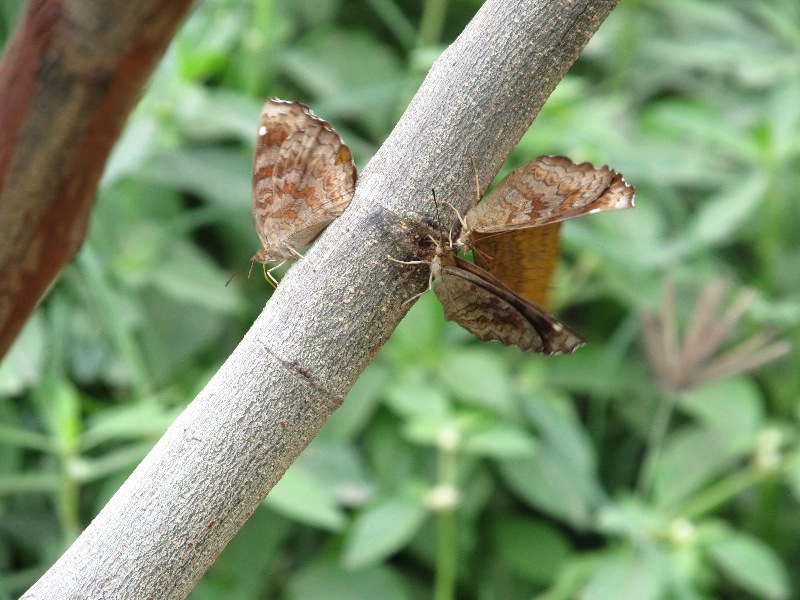
Common Castors

Common Castors with green insects
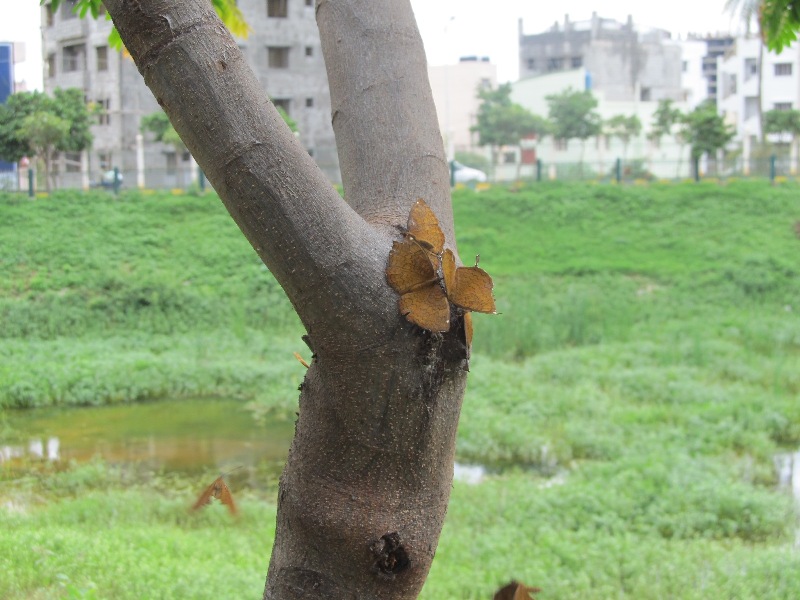
More Common Castors
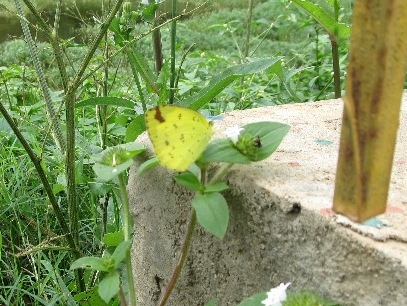
Common Grass Yellow

Wild Castor jungle
Our excitement with butterflies is not only because they are so pretty but also because they are supposed to be good environmental bio-indicators.
Shutterbugs, do visit our Puttenahalli lake and see if you can do better with your high zoom cameras!