Kaikondrahalli and Kasavanahalli lakes have been in the news for disturbing reasons lately – the rampant real estate developments in the valley zone that may lead to drying up of the downstream lakes and massive flooding in the next rainy season. There is an ongoing petition to raise awareness on this issue.
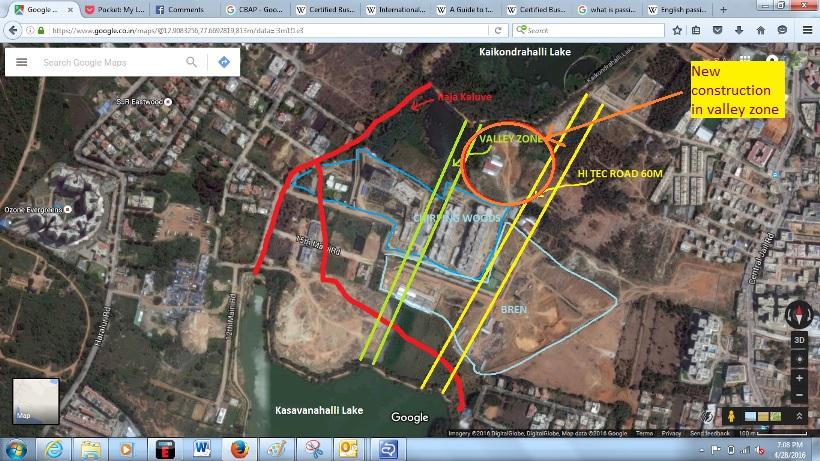
However, it is business as usual at the government offices. Authorities seem to have been quietly sanctioning one project after another. While there is Shriram Chirping Woods project that has been sanctioned in the valley zone, there is also Bren Imperia that has partly been built on the valley zone.

Pic credits: Rinaz Mohammed
Alarmingly, in the last few months, another construction at the southern tip of Kaikondrahalli lake has commenced. The construction is dumping sand by the truckloads day and night in the valley. The construction site is many feet higher than the current fence now. Despite various pleas from the volunteers at the lake to the zonal BBMP and KSPCB, there was no action from the authorities. As a result, there have been following damages to the lake property.
-
The fence of the lake at the south eastern side has tipped over, breaching the lake boundaries.
-
The inlet at the lake at that point is completetely blocked by the construction material. It is one of the two major primary drains feeding the lake from the upstream valley.
ET news carried the following article on 27th April 2016, highlighting this issue. The BBMP official’s response was “There is no violation as there is no rajakaluve there”. “The private landowner is only increasing the height of his land however they will not be allowed to build in 30m from lake’s compound”.
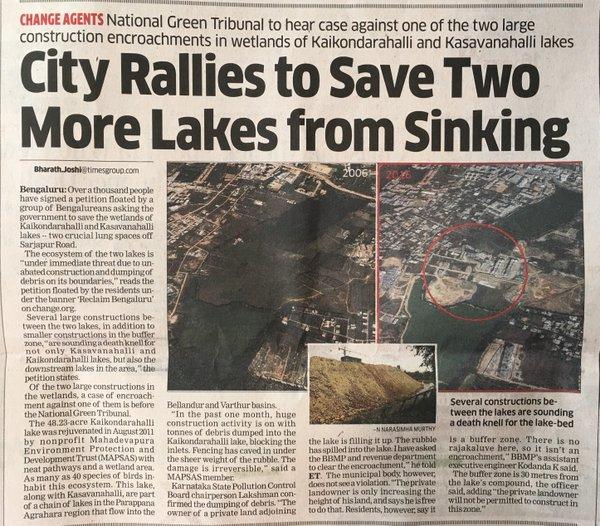
These statements are either out of ignorance or out of sheer bravado for making statements in public that can be disproved with official documents online for public view.
-
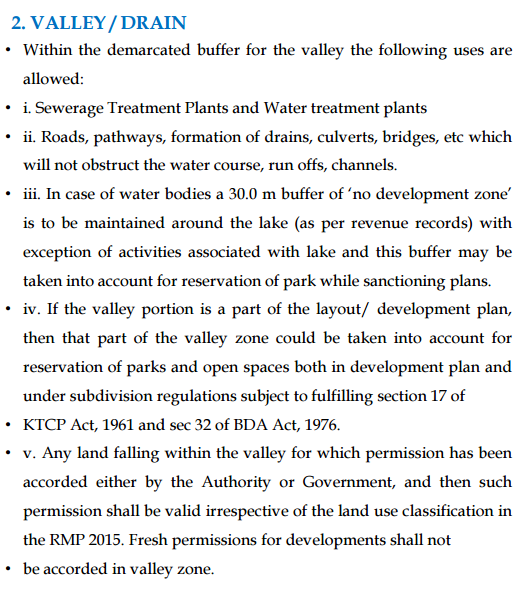
This is a clear case of buffer zone violation around the lake. A snapshot from the zoning regulations document: http://218.248.45.169/download/training/ppt7.pdf
- Construction and change in natural topography within 30m area from the lake boundary is not allowed in the buffer zone, because that can lead to cutting off rain water run off into the lake. This can also lead to flooding of all surrounding areas. That flooding happened during the rains in November 2015 in the upstream Kasavanahalli lake. In the buffer zone existing natural sloping pattern of the land should be preserved. Dumping of debris is tantamount to construction activity.
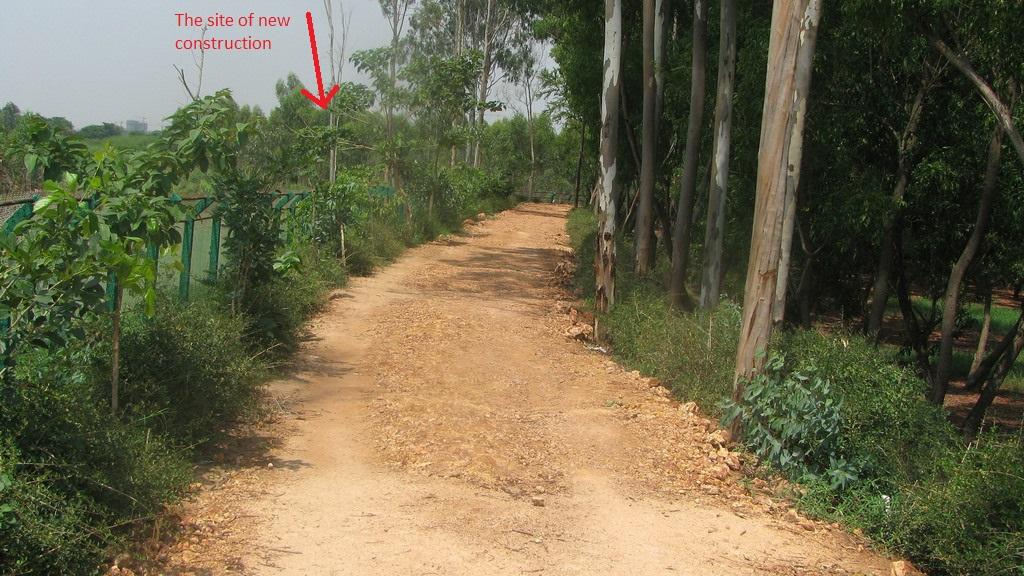
Site of the current construction, as viewed from Kaikondrahalli lake in May 2012. Looking south.
Credits: http://www.ulaar.com/2012/09/20/kaikondrahalli-a-runners-lake-in-bangalore
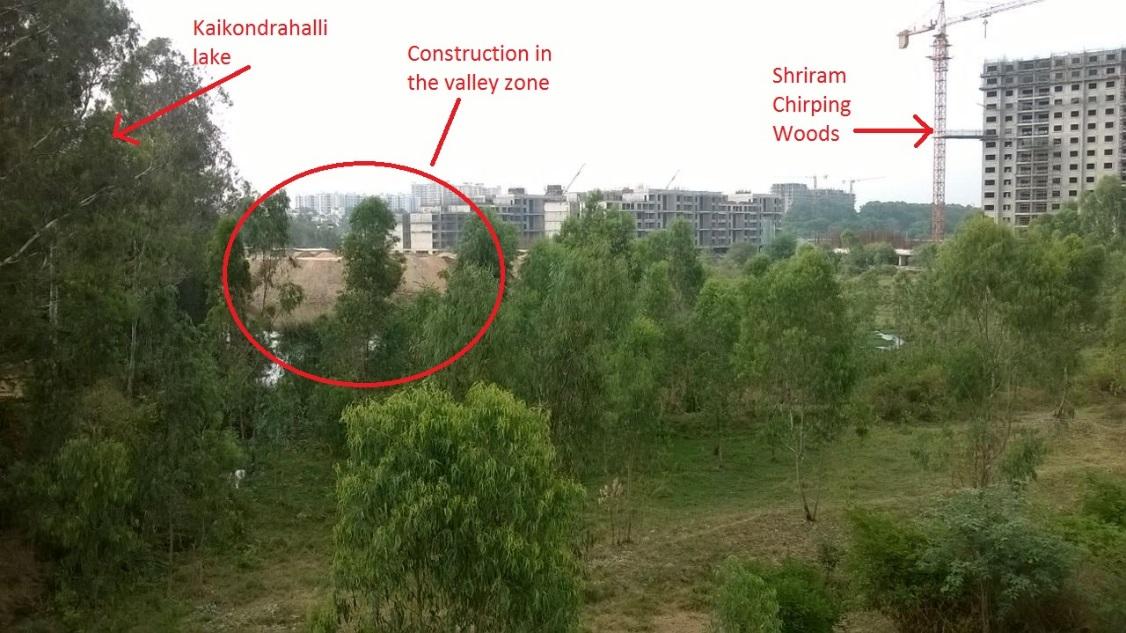
Site of the current construction as viewed from across Kaikondrahalli lake. Please note the height of the raised land compared to the natural surroundings which represents a valley.
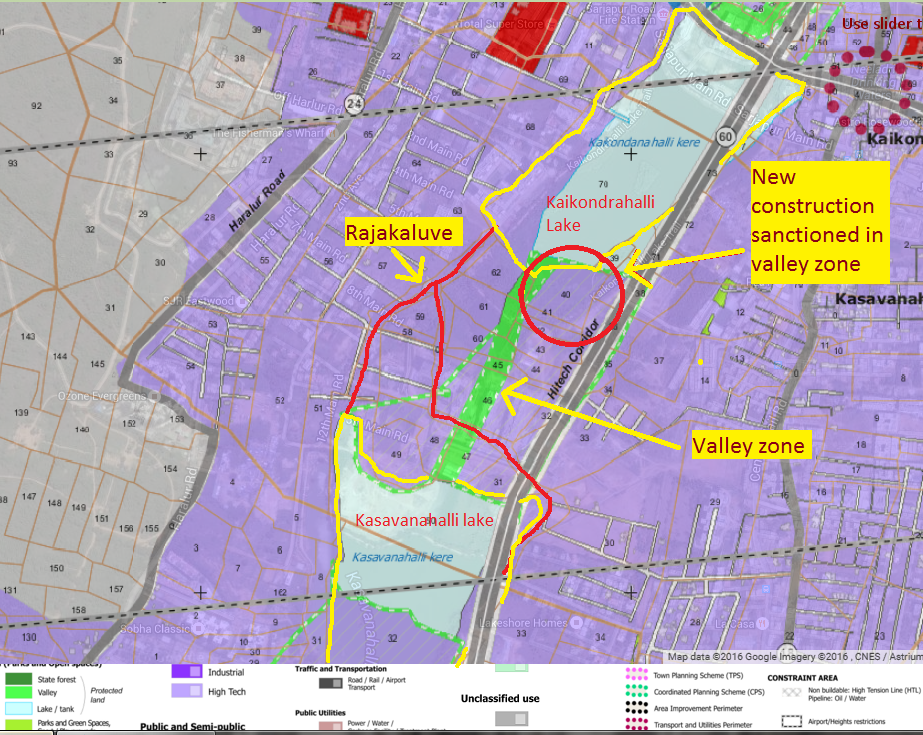
- The construction is breaching into the valley zone as indicated in the CDP 2015 below. It is clearly mentioned in the zoning regulations document http://218.248.45.169/download/training/ppt7.pdf, page 23, that fresh constructions cannot be permitted in the valley zone. The RMP 2015 was published not later than 2007. The construction has started a few months ago. Why were they given the permission to build?
New construction breaching the valley zone. Underlying map is from CDP 2015.
Other constructions in the valley zone between the two lakes. Pic credits: Shaju Nair
- The inlet into the Kaikondrahalli lake which is blocked now due to the dumping of sand, is one of the two remaining major primary drains feeding into the lake. A blog from Biome shows the position of the inlets in the lake and surveys confirm that inlet 5 is the rajakaluve and inlet 6 (now blocked) is the 2nd major source of water into the lake.
Inflow outflow map of Kaikondrahalli lake. Pic credits: http://biometrust.blogspot.in/

How did the builder get permission to build in the valley zone, why are they allowed to violate buffer zone rules and why they are damaging a lake buffer zone, which is a government property, in broad daylight, why are some government officials looking the other way, are the questions we as citizens must ask. The authorities must wake up from their slumber and answer these questions, before it is too late.
The Kadugodi Sai Gardens floods are a reminder of what happens when real estate encroaches canals. We also have the example of Chennai where real estate englufed consumed lakes and riverbeds leading to unprecedented floods recently. Let this story not be repeated in our neighborhood.