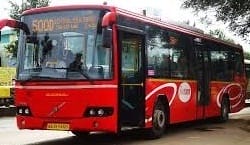
The economics of roads: Are we missing the bus?

Half the city of Bengaluru travels using 6,500 buses. The other half uses 55 lakh vehicles. This data points so obviously to what we should be doing, but unfortunately, we insist on spending enormous amounts of money supporting private transport, and less than one-tenth of it supporting public transport and sustainable options.

The illogic of financing urban mobility is that it is easy to get 30,000 crores for a full Metro system, or 1,000 crores each year endlessly for road-building, but we struggle to get 50 crores a year for footpaths and refuse to spend 200 crores for a Bus Rapid Transit system that could be operational in six months – because we prefer planning for Metro Phase 5 in that space in 2040.

Rupee for rupee, the bus is the best bet we can make. Tripling the bus fleet would remove at least 5 to 8 lakh vehicles from the roads, bring regular bus service to within 500 metres of every house, considerably improve air quality, and probably not cost more than 400 crores a year in subsidies. And all of this could be achieved in 18 months!

I was at a discussion Manyata Tech Park on January 28th to talk about potential solutions to the mobility challenges in the area. A number of options were put on the table – better access from all directions, carpools, better skywalks, a high speed off ramp from ORR, etc. – and we’ll probably try all these. But the thing that will make the most difference is a flood of bus services and safe walkability from the stops around the campus into it.

Somehow we keep missing the bus. The financial and other costs of this keep piling up, but so far the fascination with large infrastructure projects, and endless rounds of road-laying continues to dominate the government’s thinking about urban mobility.

This post was first published on Ashwin’s Facebook page.

Related Articles

The economics of roads – Part 1

Leave a Reply

Your email address will not be published. Required fields are marked *

Similar Story

Bengaluru’s poor public transport utilisation needs urgent attention: B.PAC survey

Bengaluru took the top spot this year as the world’s most congested city with commuters expecting to spend an average of 71 per cent extra travel time stuck in traffic. According to the survey conducted by B.PAC, 33 % of the survey respondents said that they do not use public transport in Bengaluru becauseof lack of frequency. First and Last Mile Connectivity to Public Transport in Bengaluru

The city with a population of over 12 million has nearly 8 million vehicles on road as of 2020. The draft revised Master Plan for Bengaluru – 2031 states that the modal share of public transport in total overall trips is only 48% as against 82 % for Mumbai.A city such as Bengaluru which has only 42 Kms of Metro serviced  that too for limited locations and a negligible suburban rail service, an efficient bus transport system is the only most significant public transport system available in the short and medium term. Since the arrival of metro services in the…

Similar Story

Workshop on Street Vendors Act

The Alternative Law Forum is organising a half day workshop on December 14 between 2.30 PM and 6.30 PM in Bengaluru, on the Street Vendors (Protection of Livelihood and Regulation of Street Vending) Act, 2014 and the Karnataka Street Vendors (Protection of Livelihood and Regulation of Street Vending) Rules, 2019. Background of the workshop This workshop is being conducted in view of the Town Vending Committees being constituted across the State as per the provisions of the Street Vendors Act, 2014 and the Karnataka Rules 2019, in seven zones of Bruhat Bengaluru Mahanagara Palike (with the exception of Bommanahalli Zone).…