It’s been two months now since my husband and I started using jaggery (bella in Kannada) in our tea and coffee. This traditional sweetener, known by different terms in different languages, from gud in many parts of North India to chakkara or sarkkara in Malayalam and vellam in Tamil, lends a subtle and deeply flavourful taste to everyday beverages. Coffee sweetened with bella for instance, has a lovely aroma and tastes wonderful, especially in this chilly weather!
Many friends of ours have also made the switch. Of course, some of them only use organic powdered jaggery (available in speciality stores and online grocery stores), but regular ‘ball’ or ‘cube’ jaggery from your neighbourhood home-needs stores works just as well, at least for me.
But all this talk of bella has had me wondering why there is such renewed interest in it. Friends tell me they have made the switch in an effort to cut processed, refined white sugar from their lives; that while there may be no immediate or visible benefits, many of them believe that on a long term basis, bella is definitely better for health.
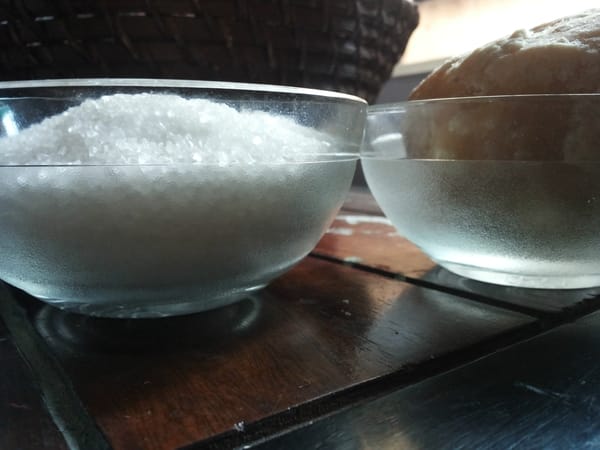
Pic: Harichandan Arakali
So is jaggery healthier? When I put that question to Bengaluru-based nutritionist Sheela Krishnaswamy, this is what she had to say: “Jaggery is less processed and less refined than sugar.” And can jaggery aid weight loss? Not true, stresses Ms Krishnaswamy. “No single food can lead to weight loss. It’s the overall change in lifestyle that adds to or reduces body weight. Besides, jaggery contains similar amount of calories as sugar, although it tastes less sweet,” she points out.
Further, while diabetics can consume jaggery, the “total calorie and carbohydrate count (in their diet) must be well-controlled. And this has to be assessed and monitored by a qualified dietitian and not decided by the diabetic on his or her own,” Ms Krishnaswamy adds.
Why ‘bella’ is better
We all know that sugar adds empty calories to your diet, so what does jaggery really contain that makes it better? There are many websites that have articles comparing jaggery and sugar, but I would like to know facts, like, for instance, the composition of bella or what it is made of.
Here is a note from the Sugarcane Breeding Institute (SBI) (www.sugarcane.res.in), an institute under the Indian Council of Agricultural Research, on the composition of cane jaggery. According to SBI, jaggery is made up of the following:
- 60-85% sucrose
- 5-15% glucose and fructose
- 0.4% of protein
- 0.1 g of fat
- 0.6 to 1.0 g of minerals (8 mg of calcium, 4 mg of phosphorus, and 11.4 mg of iron)
- Traces of vitamins and amino acids
- 100 g of jaggery gives 383 kcal of energy
And what does white crystal sugar contain? “Only sucrose to the tune of 99.5% without any minerals,” says SBI. “In Ayurveda, jaggery is considered the best base material for the preparation of medicines,” the note from SBI adds. So there you have it, here is the difference between sugar and bella.
Value for money?
And how has the experience been for us, after the big switch, so to speak? Well, having tea/coffee with jaggery seems to be aiding our digestion. My husband and I both feel a lot less bloated, lighter and fitter. Therefore, we are happier.
For me, one concern about jaggery is that it is costlier than sugar. While regular refined sugar costs between Rs 45 and Rs 55 a kg, organic bella can cost Rs 110-Rs 120 a kg. Ordinary jaggery though is comparable with sugar at about Rs 55-Rs 65 a kg. Besides, since bella is not as sweet as sugar, you end up using more of it each time, per cup. Which, in turn, means, a kilo gets over in no time. And that means monthly budgets can get a little stretched with this switch.
But then, think of it this way – if I go to a café anywhere in Bengaluru, I invariably spend at least Rs 100 for a decent coffee. On the other hand, by using bella at home, I get to savour a healthier and definitely headier, cup of coffee. The only problem now is that I love my cuppa too much – I’m having way more coffee than I used to!
Related Articles
How much sugar you should consume every day?
Organic food taking hold, though prices are higher
Adulterated foods in the markets galore