The Registrations for the CEPT Winter School in Ahmedabad are now open! There’s a wide variety of courses and one of these is ‘The Everyday City’. Sharing the details of this course below.
Dates: 1st to 17th Dec 2015
Location: School of Architecture & Planning, CEPT University, Ahmedabad
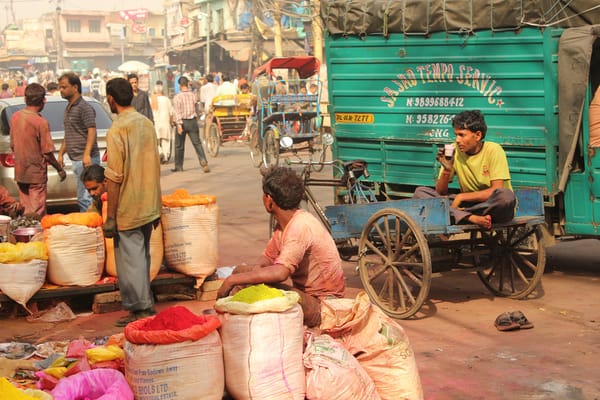
In India, as in other parts of the world, some of the physical development of the city is influenced by the everyday practices of its people. The urban spaces are continually transformed by social, cultural, religious, political, economic and other practices. Currently, these practices intermingle with each other and with the streets of the city in a random manner. The formal plan finds it difficult to account for these everyday practices due to their changing nature and because they have not been sufficiently documented or analysed.
The focus of the workshop on The Everyday City is to develop a “way of seeing” the Indian street that accepts and understands that while the street is ‘connector’ (meant for people and cars to move) it also enables these everyday practices that are unique to our country. It introduces participants to techniques of observing, recording and representing these informal spaces in order to see and value what often gets left out of planning. The question we will ask is: How can we bring about small changes in our perception and that of others through documenting ‘how people use streets on an everyday basis’?
The workshop will begin with sessions that help look at our streets and neighbourhoods differently. Every participant will begin a journal that may include sketches, photographs, field notes, maps, one-minute films and interviews in order to understand the everyday life of the city. The urban practices that are documented will be analysed through brain-storming sessions as well as discussions on key issues that emerge. You will have to make interim presentations and will have to both give and seek feedback from fellow students. Finally, you may rethink and replan a street as an urban design exercise based on the learnings. The final output will take the form of an exhibition and a seminar.
You can find the Course Schedule at: THE EVERYDAY CITY
and for ALL courses at the CEPT campus, the details are at: CEPT Winter School 2015
The last date for registrations is 25 Sept 2015