Who has the right to park on the street? For how long? And at what price? These are questions that every city faces, and universally they have come up with some practical ways of answering them.
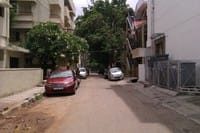
The core of these is that parking cannot be free everywhere. There may be areas where it does not need to be priced, but surely where there is high demand for parking space, it is important to price the use of public space by vehicles. Such pricing, it is assumed, will discipline people into using their vehicles less and wherever they continue to use the vehicles anyway, it will force them to accept the costs of doing so.
There is a corollary to this, which can seem counter-intuitive, but it should not be. If we truly believe that priced parking deters car usage, then it should naturally follow that if parking is not available at any price, it should seriously push people away from their private vehicles. This is what we see in highly dense urban areas like Manhattan. Most buildings provide only limited parking options, and street parking is simply banned on several streets. And what happens? Most people come by taxi and train and walk and cycle, but not by their private cars.
However, for priced parking (or its extreme cousin – unavailable parking) to work as a useful regulator of public space use, it is important to have strong enforcement. If one can park a vehicle on the street in disallowed areas without fear of punishment, then surely that’s what will happen. A basic rule of enforcement is that the certainty of punishment (and not so much the severity of it) deters bad behaviour. Where enforcement is lax, compliance will be low.
Enforcement is the point where the rubber of urban planning meets the road. Planners design roads for a certain ‘carrying capacity’. And abuse of public space usually leads to overloading of that capacity. And somebody else pays the price – footpaths are encroached for parking, thousands of road users crawl past one illegally parked vehicle, etc. There is a price to all public space; the only thing that changes between good and bad policy is who pays it.
We are beginning to see some changes with Tender SURE roads. Bangalore has always had a rule that basements in buildings are for parking. But virtually every establishment has been letting this space to more commercial use, and both tenants and visitors parked their vehicles on the streets for free. Non-uniform street widths also created spaces where such abuse flourished. By transferring more road-space to pedestrians, we took away these nooks, and the early signs from enforcement of no-parking are that basements are once again being re-opened to parking. (The link between buildings and parking space has nuances in the case of pedestrian-only streets; but we’ll leave that aside for the moment).
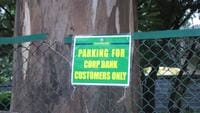
Many cities also try to create ‘local rights’ for parking, especially in mixed neighbourhoods where commerce and residences co-exist. The general principle is that those in residences have special rights because their ‘need’ for local space is different from that of visitors to commercial establishments, even if the visitors are from the neighbourhood itself. In such cases, a total number of parking spots is fixed, and local residents get vehicle stickers that entitle them to special parking rights (reserved spaces, lower rates).
The Defence Colony residents association sought such a scheme from BBMP some years ago – and I think it would be a good experiment to try, especially now with Metro service to the area available. However, such ‘local parking’ schemes depend a lot on community cohesion. When one set of people wants to retain the essence of a residential neighbourhood, and another set wants to maximise the yield from renting, the regulation of parking space through pricing can bring some discipline, but getting to that state is often a community activity, not merely a market step.
Frankly, a lot of things can be done in the city, quickly, to mitigate the chaos from vehicle use if we begin to put a price on parking. But the mafia that informally ‘collects’ parking fees in many places has resisted this. And to make this worse, among ourselves, there is a huge section that sustains the bad practices – shopkeepers, landlords, housing societies with ‘no visitor parking’ signs, and all sorts of others who’ve decided that the price of public space should be paid by someone else. The truth, of course, is that outside our own localities, we are ourselves the ‘someone else’ to whom these costs are transferred.
This post was first published on Ashwin’s Facebook page.
Related Articles
The economics of roads – Part 1
The economics of roads: Are we missing the bus?